
Exploring The 7 Main Chakras
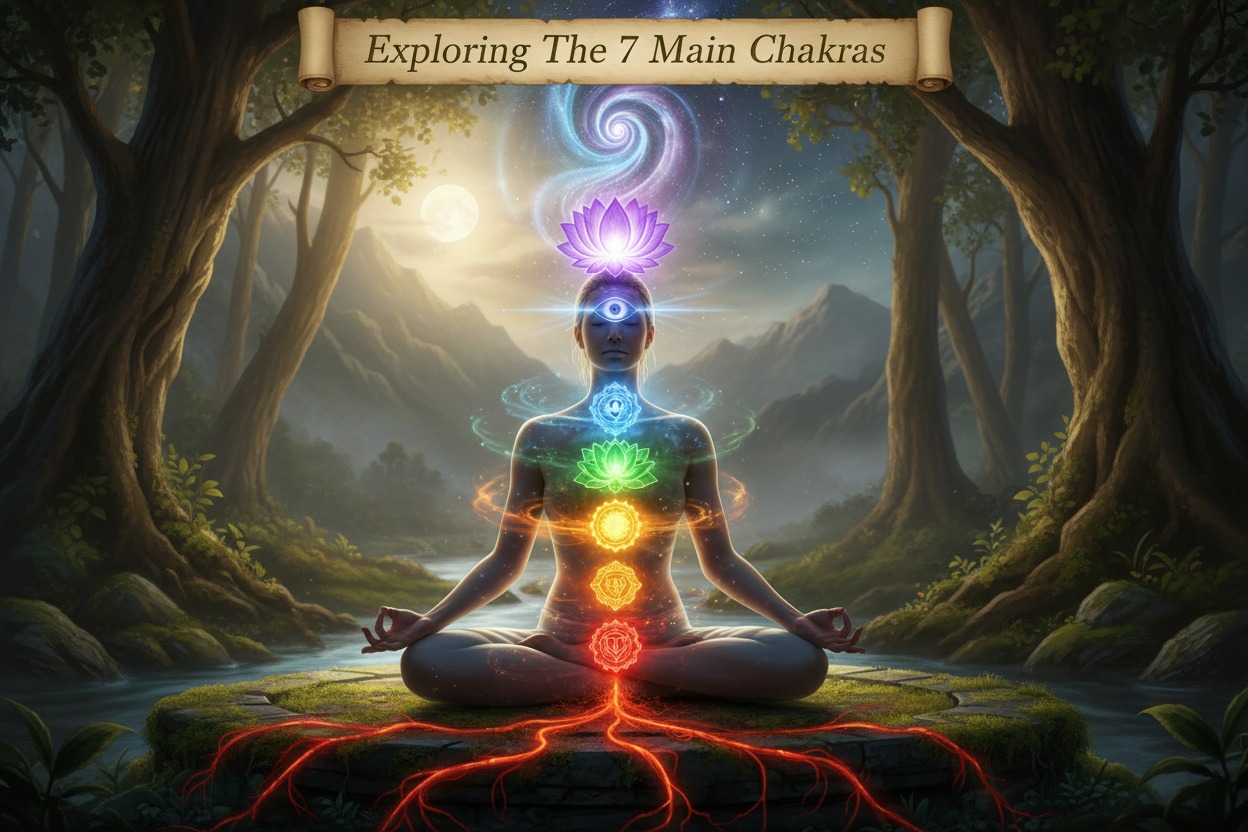
For thousands of years, people have explored the idea that there is more to us than the physical body, and many believe that we also have an energetic and spiritual dimension.
The chakra system comes from ancient Indian spiritual traditions and has become widely known around the world. The word chakra comes from Sanskrit and is often translated as “wheel” or “disc”, reflecting the idea of energy centres within the body.
It’s believed that there are many chakras within the chakra system, but seven main chakras are commonly described in modern chakra teachings.. Each is traditionally associated with a particular area of the body, along with different qualities, emotions, elements and aspects of our lives.
While different traditions and modern interpretations can vary, many people use the chakra system as a way of exploring themselves, their emotions and their sense of balance.
So, let’s take a look at the seven main chakras and what they are traditionally associated with.
1. Root Chakra-Muladhara
Location: Base of the spine
Colour: Red
Element: Earth
The Root Chakra is traditionally seen as the foundation of the chakra system. It is associated with stability, security, grounding and our basic needs. When exploring the Root Chakra, themes such as feeling safe, supported and connected to the world around us often come to the surface. In spiritual traditions and modern chakra practices, an imbalance is sometimes associated with feelings of fear, insecurity or being ungrounded.
2. Sacral Chakra-Svadhisthana
Location: Lower abdomen, below the navel
Colour: Orange
Element: Water
The Sacral Chakra is traditionally connected with creativity, pleasure, emotions and relationships. It is often associated with our ability to experience joy, express our emotions and embrace creativity. In modern chakra teachings, an imbalance may be linked with emotional difficulties, lack of motivation or feeling disconnected from pleasure and creativity.
3. Solar Plexus Chakra -Manipura
Location: Upper abdomen, around the stomach area
Colour: Yellow
Element: Fire
The Solar Plexus Chakra is associated with personal power, confidence, self-esteem and our sense of identity. It is often seen as the centre of motivation and personal strength. When exploring this chakra, we might reflect on how confident we feel in ourselves, how we make decisions and whether we feel able to take control of our own lives. In modern chakra teachings, an imbalance may be associated with low self-worth, lack of confidence or a desire for excessive control.
4. Heart Chakra-Anahata
Location: Centre of the chest
Colour: Green
Element: Air
The Heart Chakra is traditionally associated with love, compassion, forgiveness and connection. It represents the balance between the physical and spiritual aspects of ourselves and is often connected with our relationships with both ourselves and others. Exploring the Heart Chakra can encourage reflection on love, empathy, forgiveness and the ways in which we give and receive affection.
5. Throat Chakra-Vishuddha
Location: Throat
Colour: Blue
Element: Ether (Space)
The Throat Chakra is associated with communication, truth and self-expression. It is often connected with our ability to speak honestly, express our thoughts and feelings, and listen to others. Exploring this chakra can invite us to think about whether we feel comfortable expressing ourselves and whether there are things we have been holding back.
6. Third Eye Chakra-Ajna
Location: Forehead, between the eyes
Colour: Indigo
Element: Light
The Third Eye Chakra is traditionally associated with intuition, insight, awareness and wisdom. It is often described as the centre of inner vision and is connected with the way we perceive and understand the world around us. For many people, exploring the Third Eye Chakra is closely connected with intuition and learning to pay attention to that quieter inner voice.
7. Crown Chakra-Sahasrara
Location: Top of the head
Colour: Violet or White
Element: Thought / Universal Energy
The Crown Chakra is traditionally associated with spiritual connection, consciousness and a sense of something greater than ourselves. It is often described as the chakra connected with higher awareness, wisdom and spiritual exploration. Rather than being about a particular belief system, exploring the Crown Chakra can simply provide an opportunity to reflect on our sense of purpose, connection and the bigger questions we may have about life.
By exploring and reflecting on the seven main chakras, you may find new ways to connect with yourself, deepen your self-awareness and bring a greater sense of balance into your life.
Practices such as meditation, yoga and energy healing are often used to support this exploration, helping people feel more grounded, connected and in tune with themselves.